Switching from an internal combustion engine (ICE) car is a relatively straight forward thing to do. However, making the decision to switch your company’s commercial vehicles is a bit more complicated.
One of the biggest issues for a business wanting to move its van fleet to electric is battery range.
In fact some fleet managers are beginning to feel like they have been misled over the real world range their electric commercial vehicles are actually achieving versus what they were told.
Diesel is still the workhorse
Obviously vans come in various sizes and weights, but if we consider that the range of a diesel van is typically 600 – 800 miles – depending on factors such as fuel tank capacity, types of usage etc, it is easy to see why diesel has been the power behind the workhorse for a very long time.
Contrast that with electric.
Some electric vans have a claimed mileage range of 200 to 250 miles, but the reality is that many operators struggle to achieve 100 miles. Cold weather will also have a big impact on battery efficiency, in some cases reducing range by 18%.
This range issue then becomes a commercial issue as it has the potential to impact the business on a number of fronts financially.
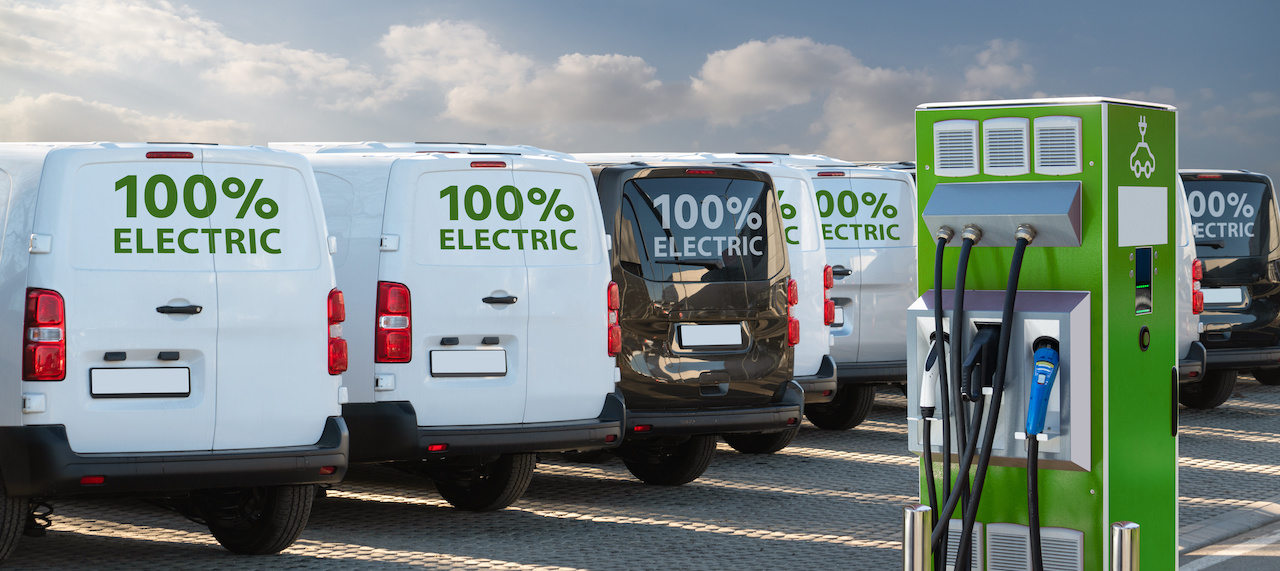
Who pays for charging an electric van?
Another point to consider is that, if an employee takes a van home overnight and plugs it in to charge, who pays for the electricity?
Next to consider is cost.
Buying an electric van can be considerably more expensive than buying a diesel.
Having said all that, the facts are that by 2035, all new vans will be electric and businesses will have no choice.
It is of course likely that in the course of the next 10 years battery technology could have greatly improved and vehicles should be (in relative terms) cheaper as volumes ramp up.
There are of course other advantages to electric. Lower running costs, lower maintenance costs, and of course no clean air zone charges.
So how easy is it in reality to transition to electric vans?
What should businesses and fleet managers be doing to address the issue today?
The answer at the moment is mixed and seems to depend on the size of fleet the business is running.
A survey of fleet managers in September 2023 revealed that almost two thirds of fleets have delayed starting their transition to electric as a result of the steep rise in energy costs.
Key issues for van fleet decision-makers, according to the report, are the planning, implementing, and charging of EVs. Having said that, roughly 22% said they are planning to add electric vans to their fleet in the next 12 to 18 months.
In addition 71% of van fleets also plan to invest in depot charge points in the near future.
These are just some of the issues facing businesses running commercial vehicles and there needs to be a well thought through strategy by businesses to be able to implement the change as smoothly as possible.
But of course there is an up-front investment cost to consider first and it is this that - at the moment - is probably top of the list.
A staged transition may be the best strategy
It seems that businesses are focused on transitioning slowly over the next few years and will be running fleets comprised of diesel, hybrid and electric as they adapt their business models to the new reality coming in 2035.
Probably a wise strategy.
TYSONCOOPER are fleet management specialists and can support you with you transition to electric vehicles.
If you want some help and advice, get in touch and we will help with your transition.

.jpg)


.png)

(1).png)
.png)